
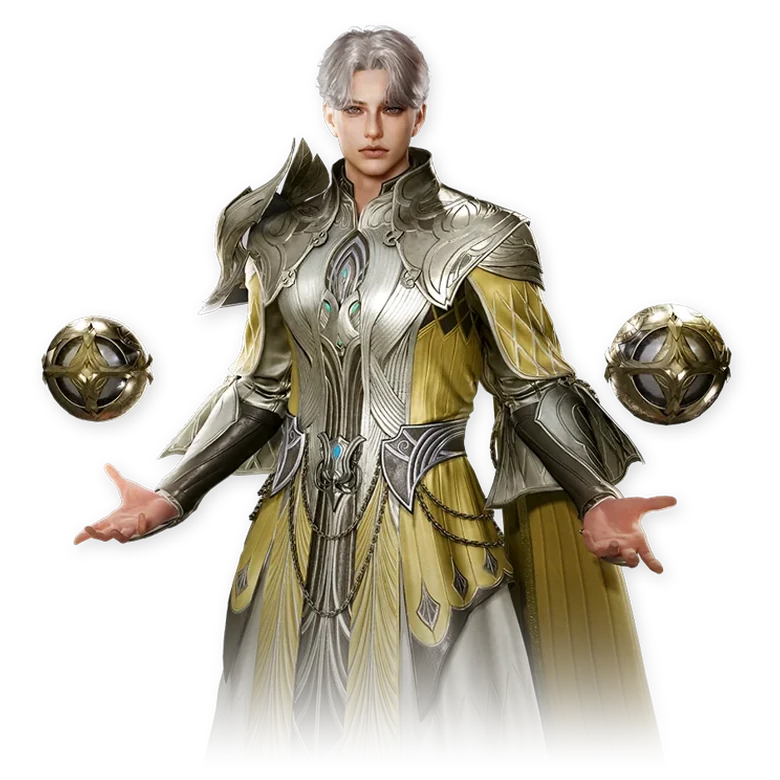
What the Chanter does in a party
Chanter is the battle-support of AION 2: a staff class that stands near the front, amplifies allies with mantras, and still contributes damage and recovery of its own. It is a force multiplier rather than a pure healer or a pure damage dealer.
The class asks you to keep buffs alive while you fight. Close distance safely, use your triggers to enable your follow-ups, and keep your mantras running; switch from offense to recovery the moment the group needs it.
How to play the Chanter
- 01
Keep mantras running
Your party buffs are your core value; refresh them before they lapse.
- 02
Close distance safely
You are a close-range support, so move in on your terms rather than the enemy's.
- 03
Use triggers to enable follow-ups
Set up your trigger skills so your follow-up attacks land.
- 04
Switch to recovery on demand
Keep a recovery tool ready and use it the moment the group needs it.
Core skill priorities
Understand what each ability contributes before copying a full rotation.
Dark Crush
A follow-up focus skill; note that older Taiwan-derived guides call it Dark Rush.
Impactful Crush
A trigger that sets up your follow-up attacks.
Rushing Smash
A movement skill to close distance into support range.
Recuperation
A recovery tool to keep yourself and allies going.
Build around the encounter
Your party and patch decide which Stigma slot matters most. Flexibility is part of the build.
Undefeated Mantra
A core mantra in cited support setups.
Sprint Mantra
A support mantra that helps the party move and fight.
Marchutan's Wrath
An offensive mantra option when the group can afford it.
Power of the Storm
A flexible slot for extra support or recovery depending on the fight.
Chanter stat priority
Attack → Magic Power → HP
The Chanter mixes physical and magical contribution, so attack and magic power both matter, with enough HP to stand near the front.
Strengths and weaknesses
Strengths
- Multiplies the whole party's output
- Contributes damage and recovery at once
- Strong in organised group content
- Rewarding for active players
Weaknesses
- Demanding to play well
- Split identity if buffs and damage are not balanced
- Needs to stay close to be useful
How to start a Chanter
- 01
Confirm the party composition
Your value changes with who else is in the group, so check what support is already covered.
- 02
Close distance safely
Practise moving into range without taking unnecessary hits on the way in.
- 03
Learn your triggers
Understand which skills enable your follow-ups so your damage lands.
- 04
Keep mantras up
Treat buff uptime as your first priority, damage second.
- 05
Use the detailed build reference
The Chanter PvE build lists source-attributed rank milestones and passive priorities.
Chanter in PvE and PvP
PvE. In PvE, the Chanter's buffs often matter more than its damage; keep mantras active and add recovery when the group needs it.
PvP. In PvP, the Chanter amplifies a team and adds pressure up close, but it must survive to keep its buffs running.
Frequently asked questions
Is Chanter a healer or a damage dealer?
Neither purely. It is a support hybrid that amplifies allies with mantras while contributing damage and some recovery.
Why do guides call Dark Crush 'Dark Rush'?
Some older, Taiwan-derived community guides use different translations. Global sources use Dark Crush; confirm the name in your client.
Where are the exact Chanter skills and Stigma picks?
See the Chanter PvE build page for source-attributed choices and verify in your live client.
Sources & review status
This is an independent reference. An outside guide is not first-hand playtesting; confirm the client version and in-game skill text before following any example.